
Where the Gold Coast ends and the view doesn’t
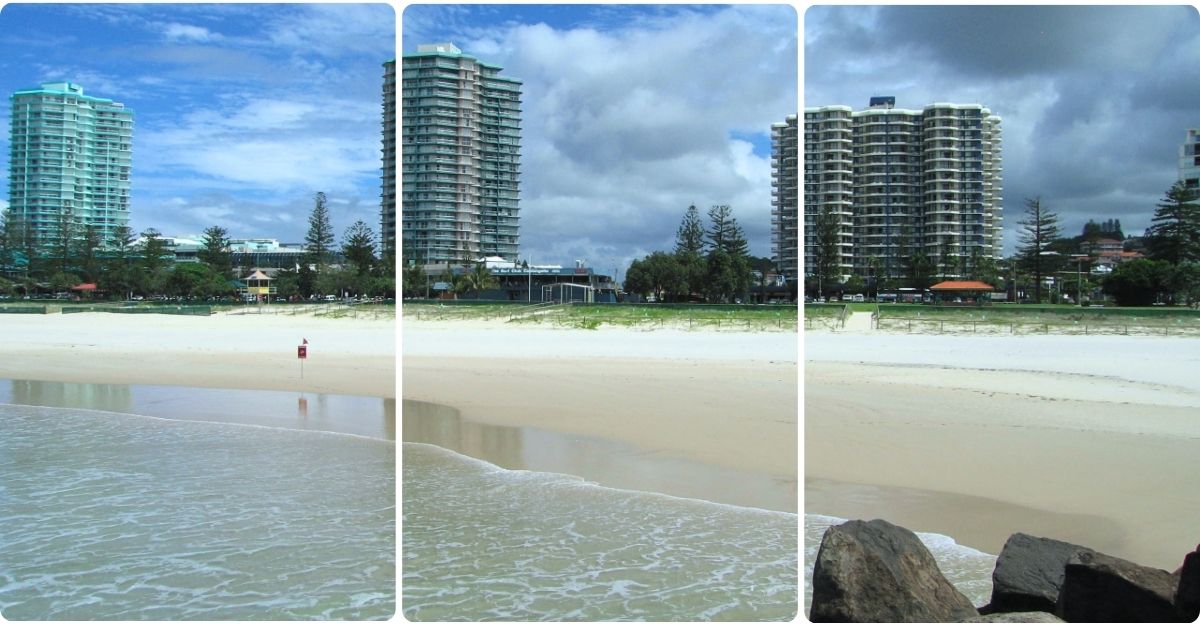
Coolangatta is the Gold Coast’s southernmost full stop, and one of its best reasons to drive south. The beach sits at the NSW/QLD border, so you’re literally standing where Queensland begins (technically, there are two more beaches, Greenmount & Rainbow Bay, before the NSW border). The Greenmount headland keeps the main beach sheltered and glassy when the ocean outside is churning. You can swim safely all year round with lifeguards patrolling from 8am to 5pm every day.
If you’re arriving at Gold Coast Airport in Bilinga (3 to 4 minutes away), Coolangatta is closer than the Surfers Paradise carpark. Families often discover it by accident this way, then come back deliberately.
Swimming and water safety
The Coolangatta Surf Life Saving Club has been patrolling here since 1922. The beach is flagged daily, and the headland creates a natural wind break that keeps the main area calmer than the open coast. Beginner and intermediate swimmers get sheltered conditions; open ocean swells roll in beyond the point if you’re chasing bigger waves.
Lifeguard patrols run year-round, 8am to 5pm. Check BeachSafe for current conditions before you go. Water temperatures range from 16 degrees in winter to 26 degrees in summer.
The Strand: dining and culture in one place
Walk off the beach and you’re 30 steps from The Strand, a 250-metre waterfront strip with 30+ restaurants, cafes and bars. Japanese, Turkish, Italian, Indian, Thai, modern Australian, wood-fired pizza, seafood. Lunch plans dissolve into choice. Coffee culture is proper here (the sort of place where baristas have opinions about water temperature). Most places have beachfront tables if you want sand-in-your-shoes dining.
The precinct runs from 72 Marine Parade, right along the beach. Happy hours are competitive. Winter is high season for visiting families, so book ahead if you’re thinking dinner on school holidays.
What you’ll actually need
Coolangatta Beach has:
- Toilets and showers (accessible facilities included)
- Wheelchair-accessible ramps and beach access platforms
- Picnic tables and barbecues
- A playground for small children (Rainbow Bay, immediately next door, has larger tree-shaded play zones if you need more)
- The Strand car park: 900+ free spaces, undercover, with 3 hours free parking on weekdays or 2 hours on weekends. Open 24/7. Entrance is on Dutton Street
Dogs are allowed on-leash everywhere on the beach except within 200 metres of the flagged bathing area. Check signage when you arrive to know where the zones are.
Getting there and around
Gold Coast Airport is 3 to 4 minutes’ drive away. If you’re using public transport, Bus 700 and 760 run to The Strand. There’s no G:Link (light rail) to Coolangatta; Stage 4 was cancelled in September 2025, so buses are your PT option.
The main street physically straddles the NSW/QLD border. You can stand with one foot in each state. Tweed Heads (the NSW twin town) is directly across, with its own dining and shopping precincts if you want a change of scene.
Nearby walks and lookouts
The Greenmount Hill Walk starts right from the beach and takes 20 to 30 minutes to the top, rewarding you with panoramic coastal views back towards Surfers Paradise and south to Coolangatta Point. Point Danger Lookout sits at the border itself, marked by the Captain Cook Memorial Lighthouse. This is where Cook first sighted Australia’s east coast in 1770. The view sprawls across the coast in both directions.
The Oceanway Walk is a coastal trail that connects these spots and carries on north around Rainbow Bay (calm, family-friendly, tree-shaded) and Greenmount Beach (north-facing, sheltered). It’s a 5 to 7 kilometre loop if you want to walk the whole thing, or pick a section.
Explore more things to do on the Southern Gold Coast, or browse the broader 100+ things to do across the entire Gold Coast.
Timing and seasons
Winter (June to August) is high season here. Water temperature dips to 16 degrees, but the beach is busier with school holidays and visiting families who come for the sheltered conditions and proximity to dining. Spring (September to November) brings warmer water and cleaner swells. Summer (December to February) is busy but warm, though afternoon sea breezes can chop the glassy conditions.
Cyclone Alfred (March 2025) caused visible erosion, with sand escarpments up to 6 metres high in places. The council is undertaking a multi-year restoration program expected to complete by 2028. The beach remains open and swimmable, but you’ll notice the changed landscape if you’ve been before.
Why Coolangatta works
There’s no rush here. The headland does its job, the lifeguards are in the water, The Strand means you don’t have to plan a second venue, and getting there from the airport takes as long as a car park walk at Surfers. Families stay longer than they meant to. Swimmers come back. People at the border point stand still for a moment and actually notice where they are.